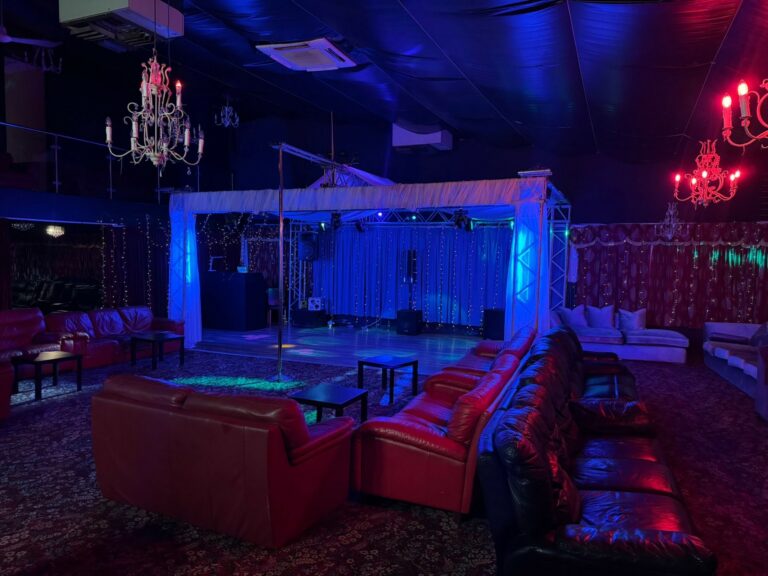


Almost every swingers club in Britain has an entry page, and they nearly all say the same thing: couples welcome, single women welcome, single men admitted on selected nights, usually at a higher price. What does that mean for trans swingers? As a pricing system, it makes sense, but if you’re trans and planning your first night out, it can feel like a question where every answer is wrong.
British swinging likes to describe itself as open-minded, and plenty of people in the scene genuinely are. The problem is that the machinery around it (such as door categories, gender ratios and membership rules) was built around the traditional straight couple. Trans people weren’t necessarily excluded deliberately, but they were often left out of the conversation.
That doesn’t mean the UK scene is uniformly hostile. There are mainstream clubs with trans-friendly reputations, dedicated trans events, longstanding TV/TS venues and queer parties that approach inclusion differently. Knowing what separates them can make the difference between a promising night and an uncomfortable one.
The Three Boxes on the Door
Most traditional UK swingers clubs sort arrivals into three categories: couple, single female and single male. Couples pay a standard rate, single women often pay less, and single men face higher prices, admission limits, or restrictions to particular nights. The system developed partly to manage gender ratios, but its simplicity creates complications for anyone who doesn’t fit neatly into those categories. The same categories shape who gets in elsewhere in the scene — what “couples only” really means for queer women follows the same rules but from a different angle.
For trans guests, the practical question is which box a venue will use. A trans woman attending alone may be admitted under the single female category, while a trans man may be treated as a single male. The difference can be big: one category might be relatively inexpensive and unrestricted, while the other could involve a waiting list, extra vetting or no admission that evening.
Non-binary guests in the UK can face an even less predictable situation. Some venues will discuss arrangements individually while others have no clearly stated policy. There is also the question of identification. A club might base admission on presentation, its own gender policy or the marker on a guest’s ID. If those don’t align, an awkward conversation at the door is a real possibility.
Send a brief message explaining whether you’ll attend alone or with a partner and ask how admission and pricing work for your situation. A clear, respectful answer is encouraging. A vague response, or one that leaves you feeling like an inconvenience, is useful information too.
If you’re wondering whether trans women can go to swingers clubs, the answer depends on the venue’s admission policy, the event and how it categorises guests. Some venues welcome trans guests across their regular events; others host particular themed nights. Ask what the policy actually covers.
What Happens Once You’re Inside?
Getting through the door is only the first part. The atmosphere inside matters just as much.
Rejection is part of swinging for almost everyone so that includes trans swingers too. Established couples get turned down, single men can spend much of an evening without finding a connection, and attraction is never guaranteed. Being trans plus a trans swinger can add another layer to that experience, particularly in mainstream venues where the crowd may be older or less familiar with gender diversity than the people attending queer and kink events.
The question isn’t whether everyone will be interested. It’s whether people can express a lack of interest without being rude or intrusive.
There’s also a difference between attraction and fetishisation. Some people are genuinely attracted to trans guests and are comfortable discussing that interest respectfully. Others can make someone feel like a novelty rather than a person. The distinction often becomes clear through conversation: is the interest about you as an individual, or does it revolve entirely around assumptions about your body?
No one owes anyone sexual attention, and no one should have to tolerate disrespect to participate. A well-managed venue should take complaints seriously, enforce its rules and make it possible to leave an uncomfortable interaction without being pressured to continue.
Mainstream trans swingers clubs UK
The following venues were identified as options for trans swingers and trans guests in general. Check current admission rules and event details before making travel plans.
Swindon Swingers and Wicked
Swindon Swingers and its Wicked nights have a strong reputation for welcoming trans swingers guests. There is in fact a trans woman hosting the events there, and non-traditional pairings don’t automatically get penalised when it comes to pricing.
That combination matters. Representation among organisers can help, but so can practical policies that don’t make guests feel like exceptions to the rules. A welcoming reputation is a useful starting point for trans swingers, though it’s still worth checking the arrangements for a particular night.
Club Love, Bristol
Club Love operates around an LGBTQ+ membership model, with applications and a designated safeguarding contact. The venue hosts socials, queer-focused nights and sex-positive events.
For someone new to the scene, the recommendation to attend a social before booking a party is particularly useful. Meeting people in a clothed, non-sexual setting gives you a chance to get a feel for the community without immediately navigating a play environment.
Bournemouth Swingers Club and Saunabar
Bournemouth Swingers Club, alongside Saunabar, welcomes trans guests and admirers and hosts trans and LGBTQ+ events. For people exploring options outside London, this South Coast pairing is a useful alternative to venues built exclusively around conventional couples.
The important distinction is whether a particular event is genuinely intended for trans guests or simply permits them to attend. Those arrangements can produce quite different experiences.
The Private Club, Birmingham
The Private Club brings traditional swinging nights together with trans, crossdressing and bi-curious events. That crossover may be very appealing for people who don’t feel entirely at home in a conventional couples club but still want to explore the mainstream lifestyle scene.
London’s Dedicated Trans Venues
London offers several options beyond conventional swingers clubs and trans swingers events.
Roma Trans Club offers events for trans women, crossdressers and admirers of different genders, welcoming singles and couples. There are monitored play areas, changing facilities and an emphasis on consent. It also hosts events in Manchester, giving trans guests outside London another potential option.
Lovejoys, near Sutton, offers a different atmosphere as a private-house social club with a bar, video lounge, food and changing facilities, rather than a late-night party built around a dance floor. Its appeal is the more relaxed, social format.
Ted’s Place, in Fulham, is a long-running trans-friendly bar with a basement play area and dedicated trans nights. Unlike a conventional couples club, it operates more as a sex-positive cruising venue, which may suit some solo guests better.
These are examples of why searching for trans swingers in London can mean looking beyond standard swingers-club listings. The same principle applies to people seeking trans swingers in Manchester or other UK cities: look at the event’s intended audience and format, not just the venue name.
The TV/TS Circuit: Similar Labels, Different Experiences
One of the biggest sources of confusion is the crossdressing circuit. In UK nightlife, “TV” commonly refers to transvestite or crossdressing events, while “TS” has traditionally been used for transsexual or transgender events. Terminology varies, and neither label reliably tells you everything about who attends.
TV nights can be welcoming social spaces in their own right. The problem arises when venues use trans-friendly language to advertise a crossdressing event without making that distinction clear. Trans women have long described the frustration of being treated as though transitioning and dressing up were interchangeable experiences.
The following trans friendly swingers clubs and events are worth checking out:
- She.world, London: caters to trans people, crossdressers, non-binary guests and admirers.
- Sweet Wednesday: associated with trans women in the lifestyle and people interested in meeting them.
- WayOut Club: a longstanding transgender nightlife venue.
- CJ’s, Glasgow: hosts a TV night.
- The Attic Experience, Derby: runs a longstanding daytime TV and admirers session.
- The Yard, Coventry: associated with cabaret, drag and a trans-welcoming crowd.
These options aren’t interchangeable. Someone looking for a night centred on trans women may want something quite different from a crossdressing social, a drag event or a general LGBTQ+ club night. Knowing that distinction helps people find the community and atmosphere they’re actually seeking.
The wider LGBTQ+ bar and cabaret scene also matters. Manchester’s Canal Street, Birmingham’s gay village and LGBTQ+ venues in cities such as Leeds, Blackpool, Nottingham and Dundee aren’t necessarily swinging spaces, but they can be places to build friendships and social connections before exploring more intimate events.
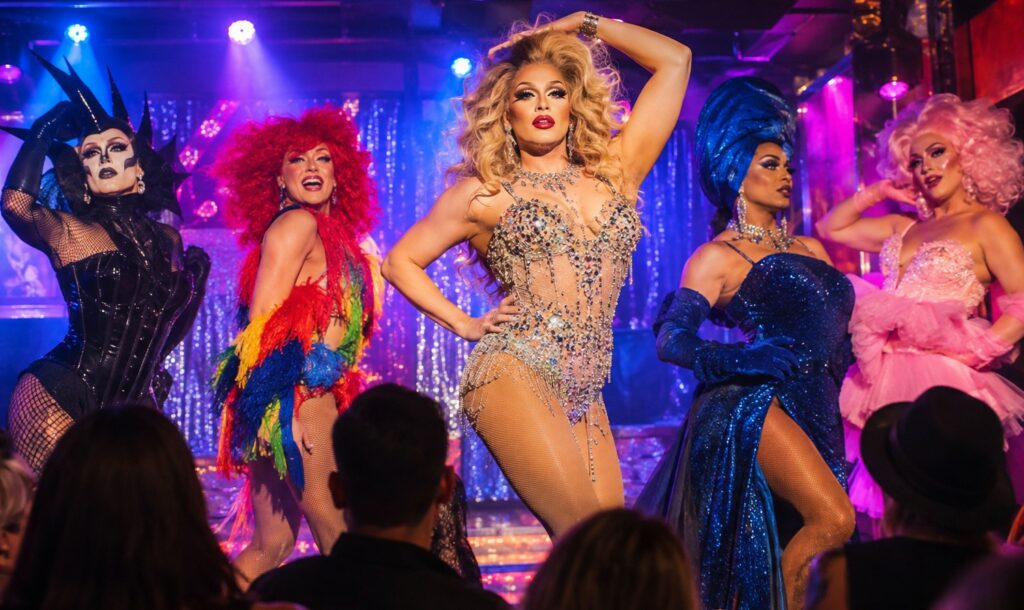
Queer and Kink Events: A Different Approach
For some trans guests, the queer and kink circuit offers a more comfortable alternative to traditional swinging. These events often place greater emphasis on explicit consent, community standards and inclusion, rather than relying on a pricing system designed around three gender categories.
Riot is a queer, sex-positive event series with a focus on marginalised communities, including people of colour and sex workers. Its events combine music and nightlife with workshops, performances and monitored play spaces. It offers a different entry point from a conventional swingers club, particularly for people who want queer community alongside sexual exploration.
Joyride sits at the intersection of queer nightlife, rave culture, art and sexual expression. Its identity is distinct from the traditional couples-club model, and its mix of music, performance and play spaces makes it another alternative for people seeking a more queer-centred environment.
Neither should simply be treated as a swingers club under another name. The atmosphere, event format and expectations can differ considerably, so it’s worth understanding what a particular night offers before attending.
Other established names in the wider fetish and lifestyle scene include Torture Garden and Killing Kittens. Torture Garden is an integrated fetish event with monitored playrooms and an explicit policy against gender-identity discrimination, rather than a venue running separate trans-specific nights. Experiences can vary, and some trans women have encountered fetishisation or assumptions that they were drag performers.
Killing Kittens takes an integrated approach that allows trans people of different genders to qualify for full membership and book events independently. That can remove the need for a cis woman to sponsor or accompany someone simply to gain entry. The event can be pricey, so be prepared to spend more than you might at a mainstream club.
The wider queer/kink circuit includes other venues with policies that vary by event. Hellfire, for example, recognises trans women and crossdressers under its single-lady category at selected nights, including SWISH, AllBarNone and The Dungeon, while using different admission rules for other events. Quest Club Leeds has a dedicated T-Girls, CD’s and Admirers session every Thursday afternoon and an all-day event monthly. StableMaster welcomes guests presenting as male within its men-seeking-men format, while Le Boudoir is not specifically trans-focused but is open to trans people.
Queer and kink events may also require advance booking, membership approval or vetting. That can make them less spontaneous than a mainstream club, but clear expectations and consent procedures can make the extra planning worthwhile.
Trans Men: The Box That Often Gets Overlooked
Trans men exploring swinging in the UK face a distinct set of barriers.
When a venue treats them as single male guests, they may encounter the highest admission fees, limited entry nights and more extensive vetting. That can be frustrating enough without the additional uncertainty of entering a room full of single cis men whose attitudes or intentions may be difficult to read.
Choosing a venue that carefully vets single male admission can therefore be a sensible precaution. Queer-led events may also offer a more comfortable environment for meeting people who are already familiar with trans identities.
Attending as part of a couple can sometimes make admission simpler, since many clubs have a separate couple rate. However, it’s important to ask whether couples must remain together throughout the evening as some venues impose restrictions that others don’t.
Another possibility is attending through an existing member couple who can explain the venue’s expectations and help with the introduction.
Experiences of attention vary. Some trans men report evenings when nobody was overtly rude, but few people showed interest either. That kind of invisibility can be discouraging, even if it isn’t the same as direct prejudice. Others find that standing out from a crowd of single men works in their favour with people who are specifically interested in them.
The broader kink scene may be a better fit for some trans men, partly because gender diversity is more openly discussed in many of these spaces. There is no single route that works for everyone, but the options extend beyond conventional swingers clubs.
Disclosure: The One Etiquette Issue That’s Different
Most swinging etiquette applies to everyone, even to trans swingers: respect consent, accept rejection, don’t assume interest and follow the venue’s rules. Disclosure is the question that can require additional thought for trans guests.
A common practical recommendation is to be clear early, often through a profile or message, so that people can make informed decisions before meeting. If disclosure hasn’t happened earlier, it should take place before sexual activity, particularly when someone might not otherwise know you’re trans.
That advice is about managing expectations and personal safety, not declaring that strangers are entitled to your medical history. You don’t owe anyone details about surgery, hormones or anatomy simply because you’re in a sexual environment. If someone asks an intrusive question, you can decline to answer.
The aim is to give everyone enough information to make their own choices while keeping your personal boundaries intact. A respectful person should be able to handle that conversation without turning it into an interrogation.
How to Get Started Without Diving Straight In
A busy Saturday night at a large club isn’t the only way to enter the scene. In fact, it may not be the best first step for trans swingers.
Munches and organisers’ socials are usually clothed, non-sexual gatherings, often held in pubs or other casual settings. They offer a chance to meet people, ask questions and understand the community before deciding whether to attend a play event.
They can also help newcomers distinguish between a venue’s advertising and its actual atmosphere. If you’re considering trans-inclusive sex parties in the UK or looking for trans-friendly play parties, that first conversation can be more useful than a long list of venue names. Check the intended audience, entry requirements, consent policy, pricing and whether the event is a social, a dance night, a fetish party or a conventional swinging event. Don’t assume that a TS friendly swingers club label guarantees the same experience everywhere.
Where the UK Scene Actually Stands
The UK scene isn’t uniformly welcoming to trans swingers, but it isn’t uniformly hostile either. It’s divided between traditional venues still working with old admission categories, dedicated trans and TV/TS events, and queer/kink communities that often approach inclusion differently.
For trans guests, especially trans swingers, navigating that landscape can involve more preparation than it does for a cis couple. That burden shouldn’t be necessary simply to enjoy a night out but that is sometimes the case and unavoidable.
Still, there are options across the country, from mainstream venues with inclusive reputations to dedicated trans events and queer sex-positive parties. For the wider picture across the community, including what clubs themselves can do better, see our LGBTQ+ swingers lifestyle guide. The most useful starting point isn’t a promise that every door will open. It’s knowing which doors are more likely to welcome you, what each event actually offers and what treatment you’re entitled to expect once you’re inside.