


Thinking about giving the swingers lifestyle a try? Trading a quiet Friday night on the couch for a swinger party can sound exciting, but it can also feel intimidating if you are new to the scene.
The UK swinger scene is active, social, and diverse. Some people start by joining an online community, others begin by visiting a swingers club, and many couples use a mix of both. Meeting people online first can make the club scene feel less overwhelming because you may already recognise a few friendly faces before walking through the door.
However you choose to begin, the same principles matter: communication, consent, privacy, boundaries, and respect. Good swinging etiquette is not about pretending to be experienced. It is about making sure everyone feels safe, comfortable, and free to make their own choices.
If you are exploring the lifestyle through platforms like GroupFun, or considering your first event or club visit, this guide will help you understand the essential rules before you take the next step.
Table of Contents
It All Starts Before You Leave the House
The most important work happens before you meet anyone else.
If you and your partner cannot talk openly and honestly when you are alone, you are not ready to bring other people into the mix. Swinging should begin with calm conversations at home, not rushed decisions in a club or online chat.
Talk It Out
Choose a quiet, relaxed moment when you both have time to think. Start with direct, open-ended questions:
- What are we actually curious about?
- What feels exciting?
- What feels uncomfortable?
- What is an immediate dealbreaker?
- What do we need to feel emotionally safe?
- Are we interested in socialising, flirting, soft swap, full swap, or simply learning more?
The goal is not to convince each other. The goal is to understand each other.
Nail Down Your Boundaries
Set your ground rules before you step into a club, create a profile, or start messaging other couples.
Talk about who you are hoping to meet, what is completely off the table, whether you want to stay together the whole time, and how either of you can pause or stop if something feels wrong.
Yes, swingers do have boundaries. Without them, you are not navigating the scene correctly. The idea that swingers have no rules is a myth – every group and every couple sets their own boundaries before getting involved.
Not everyone you meet will share the same limits, which is why aligning with your partner beforehand matters so much. Clear boundaries help avoid confusion, awkwardness, and mid-event panic.
Be Clear About What You Want From the Experience
The best way forward is to talk openly about what you hope to gain from your first experience.
At a minimum, you may simply want to socialise with people who share your interests. You might be curious about a club atmosphere but not ready to participate. You may want to meet other couples, learn how the scene works, or understand whether the lifestyle feels right for you at all.
All of those are valid starting points.
Honest communication will help keep everything on track.
This Is Not a Relationship Fix
If your marriage or serious relationship is already on shaky ground, adding more people into the dynamic will not solve existing issues. It usually makes the cracks more visible.
Swinging works best when it comes from shared curiosity, trust, and good communication. It should not be used to repair resentment, avoid difficult conversations, or prove that a relationship is open-minded enough.
Take care of your relationship first.
Move at the Pace of the Slowest Partner
If one of you is eager to jump in but the other feels nervous just walking through the door, match the slower pace. No exceptions.
Dragging someone into the lifestyle before they are ready only builds resentment. The healthiest pace is the one both partners can genuinely accept.
Changing Your Mind Is Normal
Comfort levels can change in real time.
You may feel curious before an event and uncomfortable once you arrive. You may agree to one thing in conversation and feel differently in the moment. That does not mean you failed.
A simple, “I thought I was ready for this, but I want to stop now,” should always be accepted and respected by your partner.
Choosing the Right Way to Enter the UK Swinger Scene
When you are ready to explore, you will need to decide how you want to begin.
Some people start with online swinger communities. Others prefer clubs or events. Many do both: they connect with others online first, then attend clubs or parties once they feel more comfortable.
There is no single correct route.
Online Communities vs Clubs
Online communities can be a softer first step because they allow you to browse, learn, and chat at your own pace. You can create a profile together, discuss messages as a couple, and get a better sense of the community before attending anything in person.
Clubs and events offer a different experience. They can be social, energetic, and exciting, but they can also feel intense for beginners. Some clubs have a lively party atmosphere. Others are quieter and more discreet.
Neither option is automatically better. The right choice depends on your comfort level, relationship boundaries, and what kind of experience you are looking for.
Match the Venue to Your Comfort Level
Before choosing a club or event, talk with your partner about the atmosphere you want.
Some venues are high-energy and party-focused. Others are more relaxed. Some nights may be themed, dress-code specific, or busier later in the evening. If you are not keen on partying until 4 AM, certain events may not suit you.
Check the official website before you go. Look for information about:
- dress code
- entry rules
- ID requirements
- phone policies
- alcohol rules
- membership requirements
- single-person entry rules
- event themes
- privacy expectations
If anything is unclear, ask the organisers or front desk team. Respectful venues usually appreciate guests who want to get things right.
The Realities of Consent
Consent is not just a suggestion. It is the baseline rule that keeps the entire swinger community working well.
It Has to Be Enthusiastic
“I guess so” is not a clear yes.
Silence is not a yes. Nervous hesitation is not a yes. Doing something just to please your partner, a host, or another couple is not real consent.
If it is not a clear, willing, enthusiastic yes from everyone involved, slow down or stop.
Take a “No” With Class
You are not going to click with everyone you meet, and rejection will happen.
When someone turns you down, keep it pleasant. Smile, say something simple like, “No worries, hope you have a great night,” and move on.
Pouting, sulking, pushing, or trying to convince someone otherwise is poor etiquette and will damage your reputation quickly.
Kill the Guilt Trips
Pressure can be subtle, but it is always harmful.
Avoid manipulative comments that try to push past a boundary, such as:
- “We came all this way.”
- “You seemed interested earlier.”
- “Don’t be boring.”
- “Just come upstairs for a minute.”
- “You said you wanted this in our messages.”
That kind of pressure does not belong in a respectful lifestyle space.
Consent Can Change at Any Time
Just because someone agreed to chat does not mean they owe you anything more.
Anyone can withdraw consent at any moment. If someone pulls back, goes quiet, changes their mind, or says they want to stop, stop immediately without making a scene.
Consent is ongoing.
Respect What Is Written on Profiles
If a couple clearly states on their profile that they are only looking for social mixers, specific connections, or certain boundaries, take them at their word.
Do not message them hoping you will be the exception.
Pushing past a boundary before you even meet in person is an immediate red flag.
Reading the Room
Good etiquette means paying attention to people, not just your own interest.
Just because a couple is walking around a club, sitting in a lounge, or chatting online does not mean they are looking to connect with everyone in sight. Often, people are simply enjoying the atmosphere, talking to friends, or having a night out together.
Do Not Assume Interest
Pay close attention to body language and tone.
If someone seems distracted, turns slightly away, gives short answers, or does not ask questions back, take the hint. Wrap up the conversation politely and give them space.
A respectful exit leaves a much better impression than trying to force chemistry.
Confidence vs Aggression
There is a big difference between being confident and being aggressive.
A friendly introduction is fine. A polite compliment can be welcome. But bombarding people with messages online, cornering them at a venue, or asking deeply personal questions five minutes after meeting them is not good etiquette.
Let connections happen naturally.
Drop the Act
You do not need to pretend you are more experienced than you are.
If it is your first time, say so. Experienced couples usually respect honesty, and it helps make sure everyone is on the same page from the start.
Trying to fake your way through the lifestyle often backfires.
Find What Works for You
The swinger scene is diverse, and there is no single correct way to participate.
Some couples enjoy dressing up, having drinks, meeting people, and enjoying the atmosphere without going further. Others may be interested in soft swap or full swap. Some only attend events occasionally. Some prefer online conversations first.
Figure out what feels right for you and your partner, and stick to it.
Privacy and Discretion in the Swinger Scene
Privacy is one of the most important parts of swinging etiquette.
Many people in the lifestyle have professional lives, families, social circles, and personal reasons for keeping this part of their life private. Protecting your own privacy matters, but so does protecting everyone else’s.
Choose Secure Online Platforms
Use swinger dating sites and communities that take privacy seriously.
You should be able to connect with others without being pressured to disclose sensitive personal details such as your workplace, home address, full name, or private social media accounts.
When creating a profile, agree with your partner what information you are comfortable sharing and what should stay private.
Use Scene Names or First Names
Many people use nicknames, initials, or first names only.
Do not dig for surnames, job titles, personal social media handles, workplaces, or anything else that could compromise someone’s privacy. Trust takes time. Let people share personal details at their own pace.
Navigate Social Media Carefully
Social media can reveal more than you realise.
Likes, comments, tags, follows, or shared photos can accidentally expose your interests to family, friends, or professional circles. Adjust privacy settings carefully and think about how publicly you interact with lifestyle-related content.
If you exchange social media details with another couple, keep that information private.
Guard Contact Details Like Gold
If someone gives you a phone number, username, or private contact detail, do not pass it to anyone else.
Never share a photo, message, profile, or contact detail without explicit permission. Violating someone’s privacy is one of the fastest ways to lose trust in the community.
Keep Online Reviews General
If you share an event review on a forum or community platform, keep it anonymous.
Do not write identifying details such as someone’s job, city, appearance, or personal story. Even vague descriptions can accidentally identify someone to people they know in daily life.
Focus on your own experience, not other people’s private details.
Behave Discreetly in Public Settings
Be mindful of your environment, especially when you are around non-swingers.
Loud conversations, obvious comments, or public behaviour that reveals someone else’s lifestyle involvement can create real privacy problems. Discretion protects you and the wider community.
Cracking the Club Code
Every venue has its own atmosphere and rules.
Some are social and relaxed. Some are high-energy and party-focused. Some are more private or membership-based. Before you attend, understand the type of environment you are walking into.
Check the Rules Before You Show Up
Always check the venue’s official rules before leaving the house.
Look for details about dress code, ID, entry requirements, phone storage, alcohol, guest behaviour, membership, and private areas.
Some venues are strict about where phones must be locked away. Others may have specific theme nights or entry expectations.
If you are unsure, ask. It is better to clarify than to arrive unprepared.
Dress Accordingly
Respect the atmosphere the hosts are creating.
If the night is relaxed and smart-casual, dress accordingly. If the event has a formal, lingerie, fetish, or themed dress code, follow it if you choose to attend.
Showing up completely underdressed or ignoring the theme can affect the atmosphere for other guests.
Do Not Treat People Like Free Entertainment
Adult venues often have social areas and private areas.
Do not enter private spaces just to stare at people. Do not hover, watch, or treat other guests like entertainment unless you have clearly been invited into that interaction.
Respecting space is basic club etiquette.
Do Not Interrupt Private Moments
If a couple is having a deep conversation, sitting closely together, or clearly focused on each other, do not force your way into their space.
Read the room. If people are not inviting conversation, move on politely.
Lock Up Your Phone
Many reputable venues have strict phone policies to protect privacy.
Follow them exactly. Put your phone away where required, and never try to take photos or videos inside a club or event without clear permission and venue approval.
Privacy breaches can seriously harm people’s lives and reputations.
Taking Personal Responsibility
Good etiquette is not only about how you treat other people. It is also about how prepared and self-aware you are.
Talk Safety Early
Conversations about protection and sexual health should happen early, not in the moment.
Discuss condoms, barriers, STI testing expectations, and safer-sex boundaries before any physical participation. Do not assume another couple handles protection the same way you do. Clarify respectfully.
A simple approach is:
“We prefer to talk openly about sexual health and protection before anything happens. Is that something you are comfortable discussing?”
Make a Polite Exit
You are never locked into staying.
If the mood shifts, your partner gets tired, the chemistry is not there, or something feels uncomfortable, you can leave. Do it calmly and respectfully.
A simple phrase works well:
“Thanks so much for the drink and the chat, but we are going to head back now.”
You do not need to over-explain.
Post-Event Etiquette: What Happens After You Meet Someone
The follow-up after meeting another couple or potential connection matters more than many beginners realise.
Handled well, it can build trust. Handled badly, it can make people uncomfortable quickly.
Follow Up Promptly, But Do Not Push
If you exchanged contact details and there was genuine mutual interest, sending a message within a day or two is usually appropriate.
You do not need to play games or pretend not to be interested. A simple, friendly message keeps the connection warm.
For example:
“It was lovely meeting you both last night. We enjoyed chatting and would be happy to stay in touch if you feel the same.”
If they do not reply, do not chase repeatedly.
Keep Outreach Discreet
Never show up uninvited at someone’s workplace, message their professional email, contact them through personal channels they did not give you, or search for private details online.
Use only the contact information they willingly provided.
Respecting privacy after an event is just as important as respecting it during the event.
Personalise Your Message
A thoughtful follow-up feels better than a generic one.
Refer back to something you discussed or a shared moment from the event. This helps the person remember the connection and shows that you were paying attention.
Keep it respectful and light. Do not become overly familiar too quickly.
Set Expectations Early
Once the conversation continues, be clear about what you and your partner are looking for.
That might be friendship, occasional meetups, social events, or simply staying in touch for now.
Clear expectations reduce confusion and help everyone understand whether the connection is aligned.
Keep Boundaries and Preferences Private
Anything shared privately should stay private.
Do not repeat personal preferences, relationship details, messages, or boundaries to others. The same discretion that applies inside a club also applies after you leave.
Beginner Mistakes to Avoid
Most beginner mistakes come from rushing, assuming, or trying too hard to seem confident.
Drinking Too Much
Alcohol can make people feel more relaxed, but it can also make it harder to read body language, communicate clearly, and respect boundaries.
If you are nervous, it is better to slow down than to drink your way into confidence.
Oversharing Too Quickly
You do not need to tell your entire relationship history within five minutes of meeting another couple.
Share gradually. Let trust build naturally.
Assuming Interest Means Consent
Someone being friendly does not mean they are interested in more.
Conversation is not consent. Flirting is not consent. Attending a club is not consent.
Ignoring Your Partner’s Signals
If your partner seems quiet, tense, withdrawn, or uncomfortable, check in privately.
Do not push forward because you are having a good time.
Comparing Yourselves to Experienced Couples
Experienced couples may look relaxed because they have had many conversations and learned their boundaries over time.
You do not need to match their pace.
Forgetting That Social-Only Is Valid
You can attend a club, join an online community, or chat with others without agreeing to anything physical.
Socialising, observing, and learning are valid first steps.
Quick Lifestyle FAQs
What is the absolute golden rule?
Consent. Everyone involved must clearly agree to every interaction and have the power to stop at any time.
Can I say no after walking into a private area?
Yes. You can change your mind whenever you want. No perfect explanation is needed.
How do experienced swingers handle rejection?
They do not take it personally. A simple “No worries, have a great night” is usually all it takes.
Are phones allowed inside swingers clubs?
Many reputable clubs restrict or ban phones in certain areas to protect privacy. Always check the venue rules and follow them exactly.
Should we agree boundaries before leaving the house?
Yes. Discuss boundaries before you go so nobody feels caught off guard later.
What should I wear to my first club visit?
Check the club’s dress code or event theme online first. If you are still unsure, choose something polished, comfortable, and respectful of the venue’s atmosphere.
Is it okay to only socialise at first?
Yes. Many couples start by meeting people, chatting, and getting comfortable with the environment before deciding whether they want anything more.
What Matters Most
Swinging etiquette is not about memorising every unwritten rule. It is about respect.
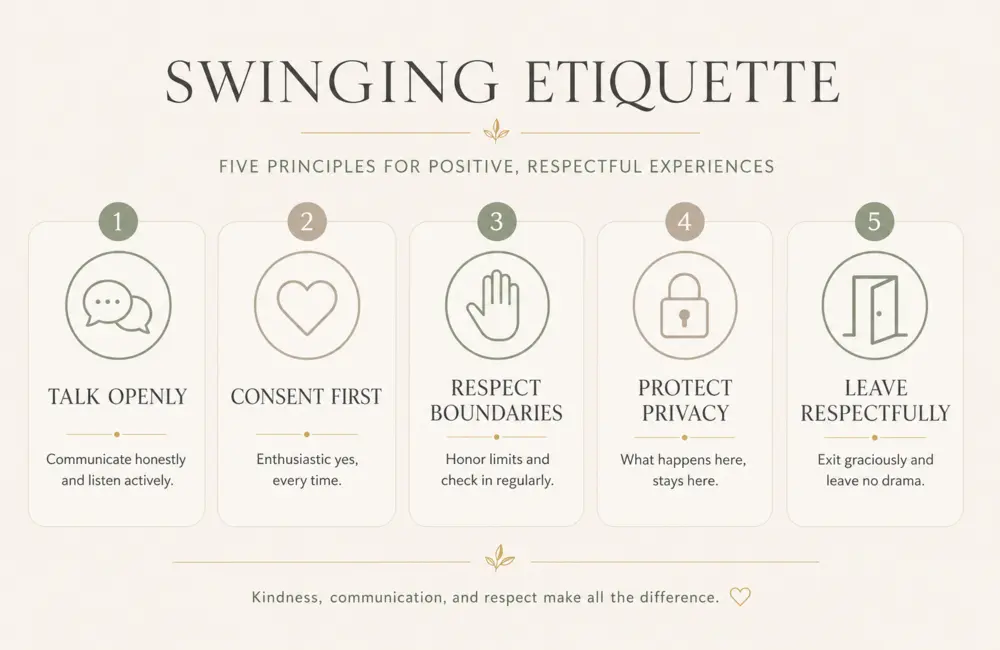
Talk honestly with your partner. Set boundaries before you meet others. Take rejection gracefully. Protect people’s privacy. Follow club rules. Communicate clearly after events. Never pressure anyone, and never ignore discomfort.
If you want to explore the lifestyle without jumping straight into a physical club, creating a profile on GroupFun can help you chat with local couples at your own pace.
Start slowly. Stay discreet. Respect every boundary.
The best reputation you can build in the swinger community is simple: be the kind of person other people feel safe around.
Ready to Meet Real Members Near You?
Join the UK’s top free and inclusive lifestyle community — where swingers, adventurous couples, open-minded singles and curious groups connect. No fake profiles. No hidden fees. Just real people and real fun.
Join Free — Let Me In!